Check the Food Scrounge News page for the latest interesting and strange food stories.

Waiting for dinner
Check the Food Scrounge News page for the latest interesting and strange food stories.
Waiting for dinner
Posted by scroungelady on January 11, 2012
https://southernfoodscrounge.com/2012/01/11/new-year-new-food-scrounge-news/
Cabbage and pork chops – two of the “good fortune” foods to eat on New Years Day. We did have our blackeye peas w/bacon, cornbread, ham and other fixins. Now lookin at a ham is boring so I’m sharing what I scrounged together earlier in the week but it still fits the holiday theme. The gentleman selling veggies on the former Beverly theater lot had lush heads of cabbage – perfect because they keep well in the refrigerator; just hack off a wedge when the scrounge mood strikes. I have various cuts of salvage grocery pork in the freezer so it has become the meat of choice lately. Did you know why people in the deep south ate more chicken and pork than beef? Before refrigeration was available, it was best to eat what you killed very soon. Small critters like chickens and hogs could be eaten in a day or two, before they could spoil.
Two Cabbage Braised Pork Chops (serves 2)

Seasoned pork chops
Sprinkle two pork chops (boneless loin here, but other types are OK) with black pepper and “pork chop seasoning” (I use Penzeys). You can create your own with salt, garlic powder, white pepper, onion powder, and ground ginger. Yes, I know “seasoning” in culinaryspeak is salt and pepper but lets go with the common usage for sake of brevity. Heat a skillet to medium; spray with food release.
Brown the chops for 2-3 minutes per side.

Pork chops browning
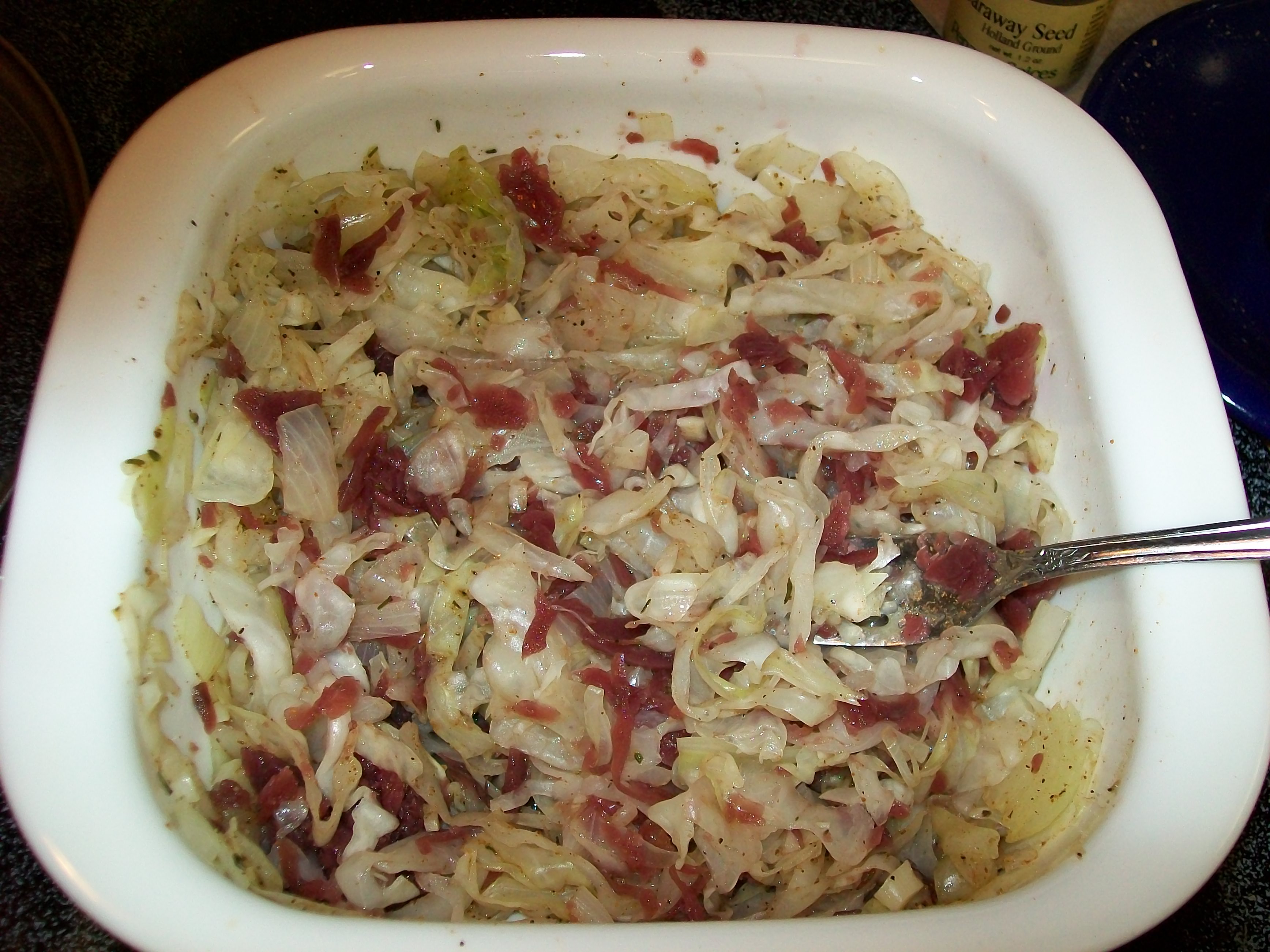
Cabbage mixture over pork
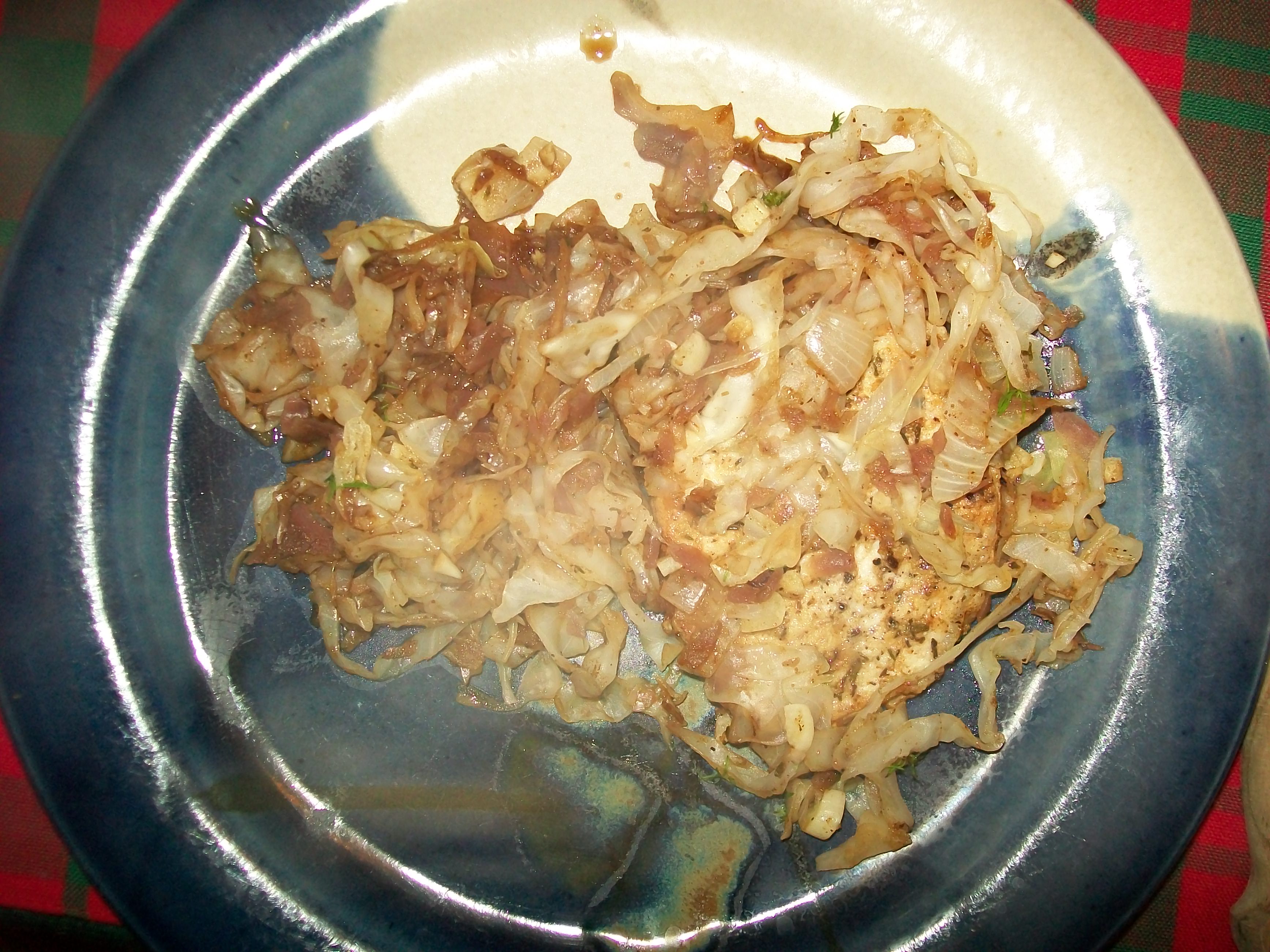
Plated pork chop with cabbage
Slice green cabbage into 1/2 inch ribbons and break up slightly. If you’re in a hurry, precook the cabbage in the microwave for 3 minutes before adding to the pan. Put the cabbage and 1/2 cup drained red cabbage (the sweet/sour kind) over the pork chops, mix together gently with a fork. Be sure to bury the chops! Turn the heat to low/simmer.
Now take a cheap bottle of sherry and mix 1/2 cup with 1/2 tsp Kitchen Bouquet (my Mama’s anti-white cabbage trick). Pour it over the cabbage mixture. If you don’t have a cooking wine or don’t want it, substitute with chicken stock, water, or cider. Cover the pan and cook until the cabbage it tender, about 20 minutes. Serve with a green veggie for plate appeal. French bread or cornbread, pour some wine and you be done! My cornbread recipe will be in a future post. Toast the New Year!
HAPPY NEW YEAR RIDE!

Hey Mr. Mike
Actually two Mr. Mikes taking a ride on my rig. First ride of the New Year!
Posted by scroungelady on January 2, 2012
https://southernfoodscrounge.com/2012/01/02/buried-two-cabbage-braised-pork-chops-happy-new-ride-year/
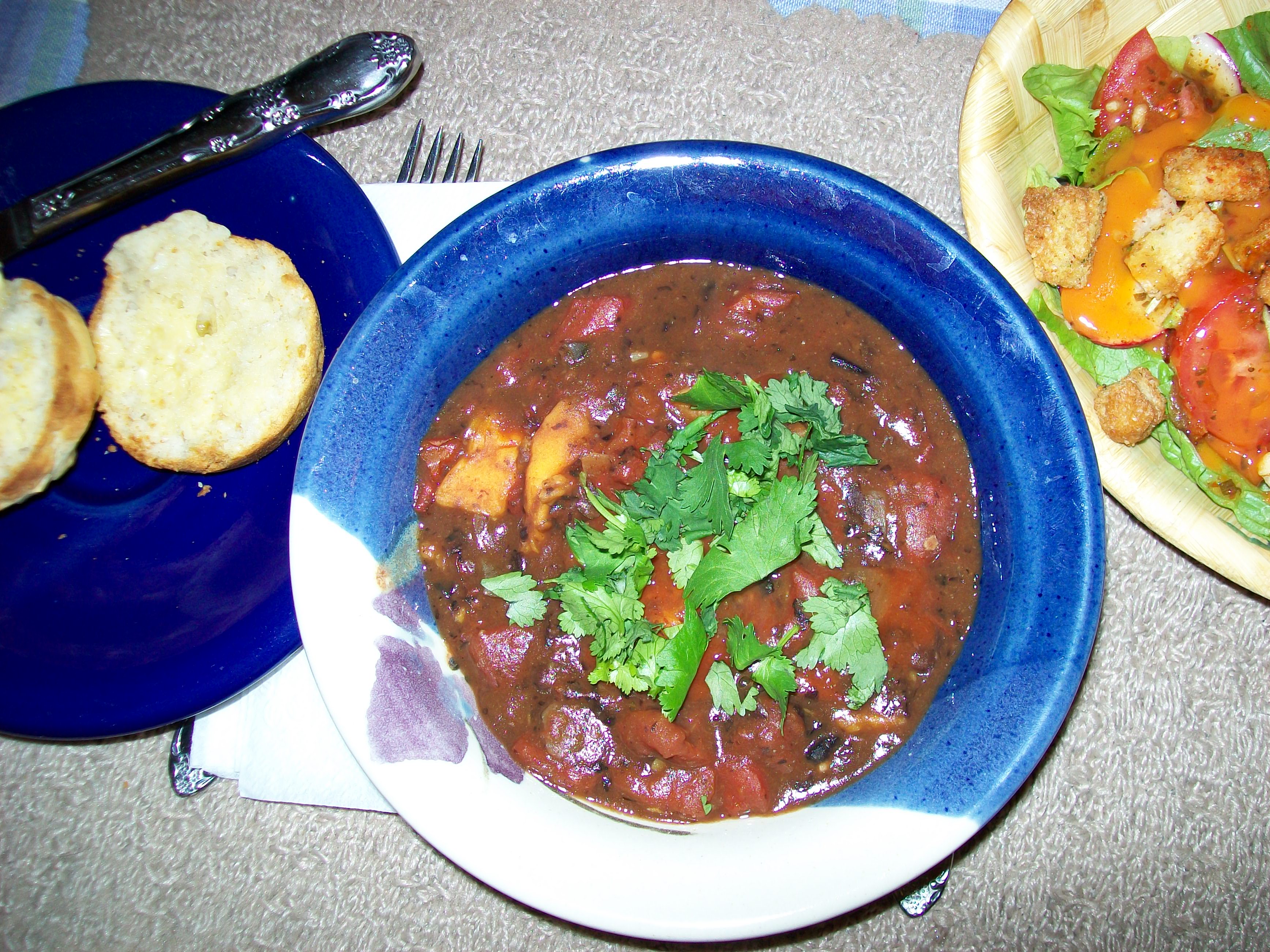
Black Bean & Sweet Potato Chili
Black bean and sweet potato chili – I made this after we returned home from the new country bar just up the road. Not as in country music, but out in the country. We live about 9 miles from the closest town, so my scrounging is honed to a fine point. It’s a nice backroad ride to town, but still one must plan ahead cuz nothing is open 24/7 in these parts.
Black Bean and Sweet Potato Chili
1 15 oz can of refried black beans
1 sweet potato (6-8 oz)
1/2 cup chopped onion
1-2 cloves garlic, minced
1 tsp ground cumin
1/2 tsp ancho chili powder
1/2 tsp chili powder (your choice of heat level)
1/4 tsp chipotle chili powder (or cayenne)
Salt and pepper to taste
1 Tbsp (scant) olive oil
Water, stock, beer or combination
In a 2 qt saucepan saute the onions in olive oil until they soften and begin to color. Add the garlic and continue cooking over medium heat until the garlic softens. Garlic burns easily; stir frequently and adjust heat as necessary. While the onion cooks, pierce the sweet potato skin on all sides. Microwave on high for 2 minutes, turn the potato over and microwave on high another 2 minutes. All microwaves cook differently; just cook until it feels soft, but not mushy when touched. Let the potato cool while the onion/garlic mixture gets nice and soft and golden.
Add the beans to the onion/garlic mixture. Add one cup of your liquid of choice and stir the mess well. Add all spices and seasonings, stir to combine while adjusting the heat to medium. Peel the skin from the sweet potato. Your hands work fine for this task. Then dice the potato (or your preferred size) and add to the chili. Add liquid to your desired consistency; most likely another cup will be needed if not more. Let the mixture simmer for 10-15 minutes, stirring occasionally.
Serve with your choice of topppings. Suggest using sour cream, shredded cheddar, cilantro, and LOUISIANA HOT SAUCE!
Tossed salad and BEER and you’re good to go.
We like our food on the spicy side; you may adjust spices to your taste; measuring with your fingers is OK.

It's a long ride to town
Posted by scroungelady on December 23, 2011
https://southernfoodscrounge.com/2011/12/23/back-from-the-bar-black-bean-and-sweet-potato-chili/

Turkey not tuna no bake casserole
No bake tuna casserole – no wait, a no bake turkey casserole. I don’t know what came over me. Guess I was tired and Mr. Mike was at his evening class, so it was time to cook wierd and easy. As you’ll see, substitutions were made, but cookbook recipes are meant to be guides only not set in stone. This one came from Believe It! Quick and Easy Meal Solutions (2008).
8 oz penne, elbow, or bowtie pasta
1 1/2 cups frozen vegetables (I used cut green beans & mixed vegetables)
1/4 to 1/2 cup milk (I used skim)
6 oz cream cheese (can use 1/3 reduced fat or regular)
1 12 oz can tuna, drained & broken into chunks (I used cooked diced turkey from the freezer in place of tuna)
Salt & black pepper to taste
1 tsp Fines Herbs (my addition, choose your own herb mixture)
Cook pasta according to package directions. If desired, add frozen vegetables during the last 4 minutes of cooking. Drain and return to pan. I microwaved the vegetables in a separate container because cooking pasta and veggies together is too much even for me. Also don’t like tossing nutrients with the pasta water. I kept about 2 Tbsp pasta water in the pan to help melt the cheese. Add the milk and stir over medium heat until cheese is melted and the pasta and vegetables are coated. Add seasonings. Fold in turkey (or tuna) and heat through. Makes four servings. Cooking & prep time: 20 minutes.
More recipes to share in the next several days. I’ve been writing Christmas cards and getting some legal materials together. I liked this casserole because there is little cleanup and it’s one of the few tuna casserole recipes that isn’t baked.
This is what the scrounge cats did while I was cooking.
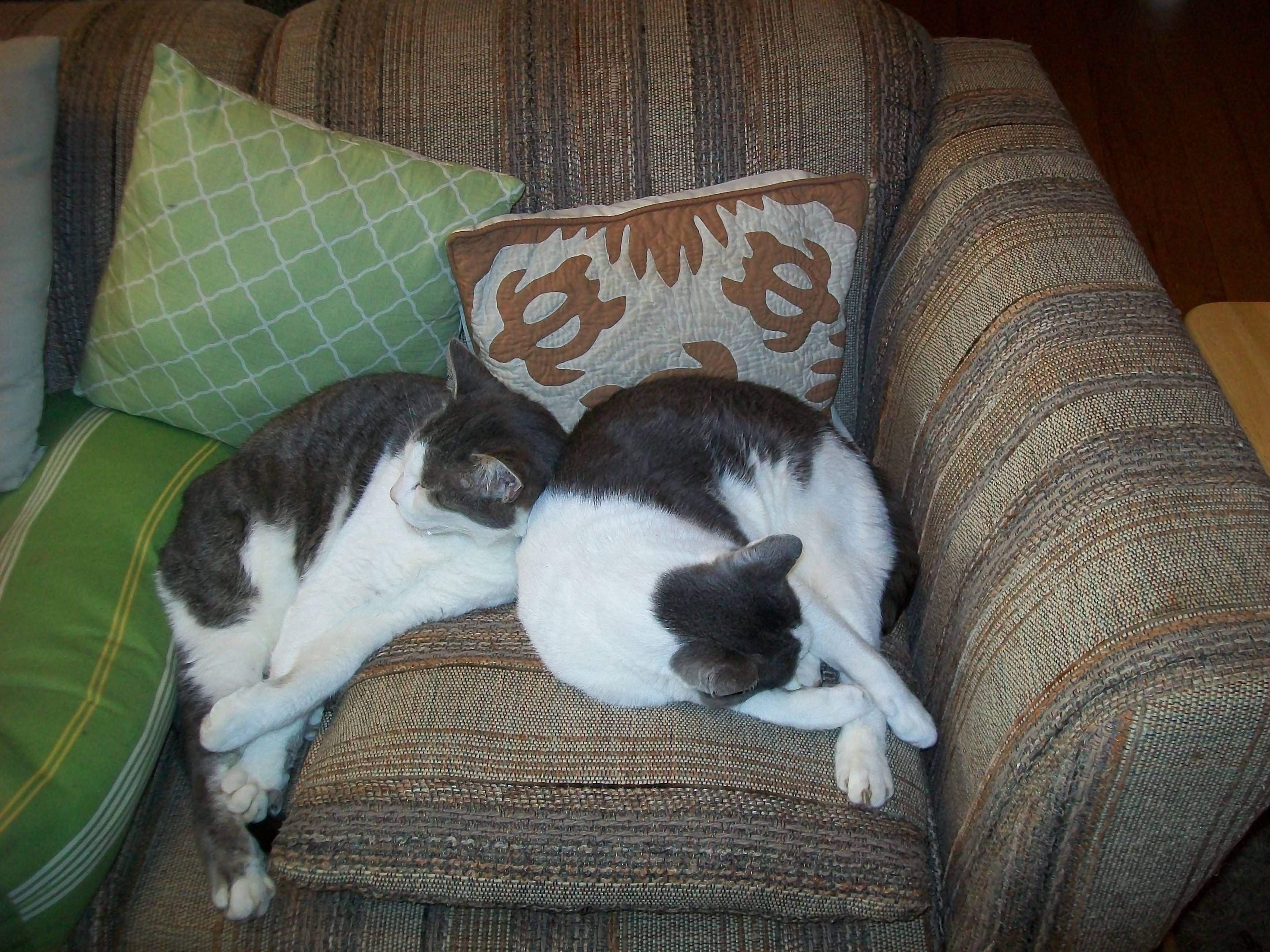
Turkey is boring. Wake us when it's tuna
Posted by scroungelady on December 19, 2011
https://southernfoodscrounge.com/2011/12/19/no-tuna-casserole-turkey-again/

Taco rice with lots of toppings
Taco rice – it does sound like some freeze dried product but it actually comes from Okinawa. Call it creeping American imperialism or stroke of brillance, but it is popular in that part of the world, with or without a taco truck. This recipe comes from the Penzeys catalog.
Taco Rice (serves 4)
1 cup uncooked rice (see note)
1 lb lean ground beef or turkey
1/4 cup taco seasoning (I use Penzeys mix but the taco mix packets like Old El Paso would do OK)
3/4 cup water
1 cup salsa
Shredded lettuce
Shredded cheddar cheese
Sliced Black olives
Diced avocado
Sour cream
Add meat to a spray released skillet over medium high heat. Cook, stirring to break up the meat, until it is well browned. Drain fat if necessary. Add the taco seasoning and cook 2 minutes, stirring frequently. Add the water, stir to combine. Reduce heat to low and simmer about 8-10 minutes. Most of the water should have evaporated but the meat will be well coated with the sauce.
Divide the rice inot four wide bowls. Top the rice with the meat mixture, then add 1/4 cup salsa to the meat. Top with the lettuce and cheese; serve the other toppings on the side.
I like this recipe because you can add leftover bits or leave out some items such as salsa if you’re out and it still tastes good. Last week I added about half a cup of leftover black beans/sweet potato chili to the meat mixture.
Serve with tortilla chips and BEER.
Note: People complain about cooking rice. It’s not hard to cook the real stuff. Save your dignity and don’t use instant or the parboiled variety. Do this: For each serving use 1/4 cup raw rice and 1/2 cup water. For the recipe above you’d need 1 cup raw rice and 2 cups water (yields 3 cups cooked). Heat water in a covered casserole in the microwave until it is just below boiling, about 3 3/4 minutes in my microwave. Add the rice and heat on full power for 45 seconds. Then reduce heat to 30% and cook for another 12-13 minutes. Let it set for about 5 minutes, covered, before serving. If using brown rice, increase cooking time to about 17 minutes. Experiment a bit with times and power levels, your microwave may be different. See? Cheap, good rice.
Posted by scroungelady on December 12, 2011
https://southernfoodscrounge.com/2011/12/12/tay-cos-and-rice-taco-rice/
From HealthlandTime.com, written by Alice Park (she has a Facebook page)

We may not know all the ways in which the chemical bisphenol-A (BPA) affects our health, but we can be assured that we’re exposed to it frequently — BPA is in many plastic products and lines nearly all food and beverage cans.
Exposure to BPA, an endocrine-disrupting compound that mimics the body’s hormones, has been linked to heart disease, diabetes and obesity, and to potential problems during development in fetuses and young children. In Canada and Europe, the chemical has been banned outright from baby bottles, and while many manufacturers have removed BPA from baby products in the U.S., it hasn’t been regulated yet by the government.
Researchers led by Jenny Carwile, a doctoral student in epidemiology at the Harvard School of Public Health, sought to figure out just how much BPA you get from eating food from cans. Carwile and her colleagues recruited 75 fellow students and staff members to participate in the study. Half of the participants were asked eat one 12-oz. can of vegetarian soup each day for five days, while the other group ate soup made from fresh ingredients. Then, after a two-day interim of no canned soup, the two groups switched roles for another five days. This way, says Carwile, she could be sure that whatever else the participants were eating during the two-week study wouldn’t affect their BPA levels, since the only thing that changed was the source of their soup.
To measure levels of BPA, the researchers asked all the participants to give urine samples after each soup-eating period. Carwile found that in the fresh-soup group, average levels of urinary BPA were about 1.1 micrograms per liter, roughly equivalent to what’s seen in the average American adult. After five days of eating canned soup, however, those levels rose to 20.8 mcg per liter, a more than 1,000% increase.
The study — the first to measure how much BPA is absorbed by eating canned food — found some of the highest recorded levels of BPA in urine outside of manufacturing facilities where BPA is used. “We were surprised,” says Carwile. “Other studies have quantified the amount of BPA in canned food itself, so we were expecting a modest association. But this is really big.”
Although the study, published in the Journal of the American Medical Association, looked only at canned soup, the results likely apply to other canned foods and beverages as well.
The researchers did not explore the health effects of the spike in BPA levels or how quickly those levels may return to normal. Other studies have noted that BPA levels do fluctuate depending on people’s exposure to the chemical, but it’s not clear yet whether repeated spikes of BPA concentrations are particularly harmful or not. “We see an increased amount of BPA in urine. We don’t know how long that lasts, and we don’t know the effect of a fluctuating BPA level on health outcomes. But the results definitely deserve further study,” says Carwile.
According to the Centers for Disease Control and Prevention, 93% of Americans have a detectable amount of BPA in their bodies. BPA comes not only from food and drink in cans, but also those packaged in polycarbonate plastic. The chemical is also found on thermal register receipts, which people receive at checkout at nearly every retailer.
The Food and Drug Administration says the small amount of BPA exposure we typically get doesn’t appear to be toxic, but notes that recent studies have led to “some concern about the potential effects of BPA on the brain, behavior, and prostate gland in fetuses, infants and young children.” A growing number of studies also links BPA exposure to changes in liver and heart function, and to detrimental effects on insulin levels. In a study involving a U.S. government health database, for example, British researchers reported that people with the highest levels of BPA in their urine were twice as likely to have heart disease or diabetes as those with lower levels.
The FDA is currently conducting further studies on the effects of BPA exposure and supporting other research seeking alternative ways to manufacture food and beverage cans without BPA in the lining. In the meantime, the agency is continually urging manufacturers to stop using BPA in baby bottles and feeding cups.
Posted by scroungelady on November 23, 2011
https://southernfoodscrounge.com/2011/11/23/canned-soup-more-things-to-worry-about/
 Southernfoodscrounge


Master basic techniques & safety with these beginner tips. Start small, wear gear, use smooth inputs, & stay aware. Enjoy the ride!
Home of Sadie the Paper Lady
Exploring Irish Emigration in the 19th Century United States
Wanderings of a Creative Mind...
You know, it's cool for cats.
I previously worked as a news and sports photographer. Recently I have been enjoying wildlife photography. My approach toward bird photos is similar to sports photography. I attempt to capture mostly action and hopefully a unique perspective.
A unique blend of humor, inspiration, and all the other flavors in the cupboard
Daily news, tools & information for Small Businesses, the Self Employed & Home Based Businesses
Service Industry Stories and More Since 2012
The wacky stories of a crazy lady.
Bar chatter on a blog where I am always right...
Amateur baker with a passion for eating!
Grab a Cup. Five Bucks at the Door.
Everyday Indian Food
writings, poetry, art, photography, novels, family and parenting
 southernfoodscrounge